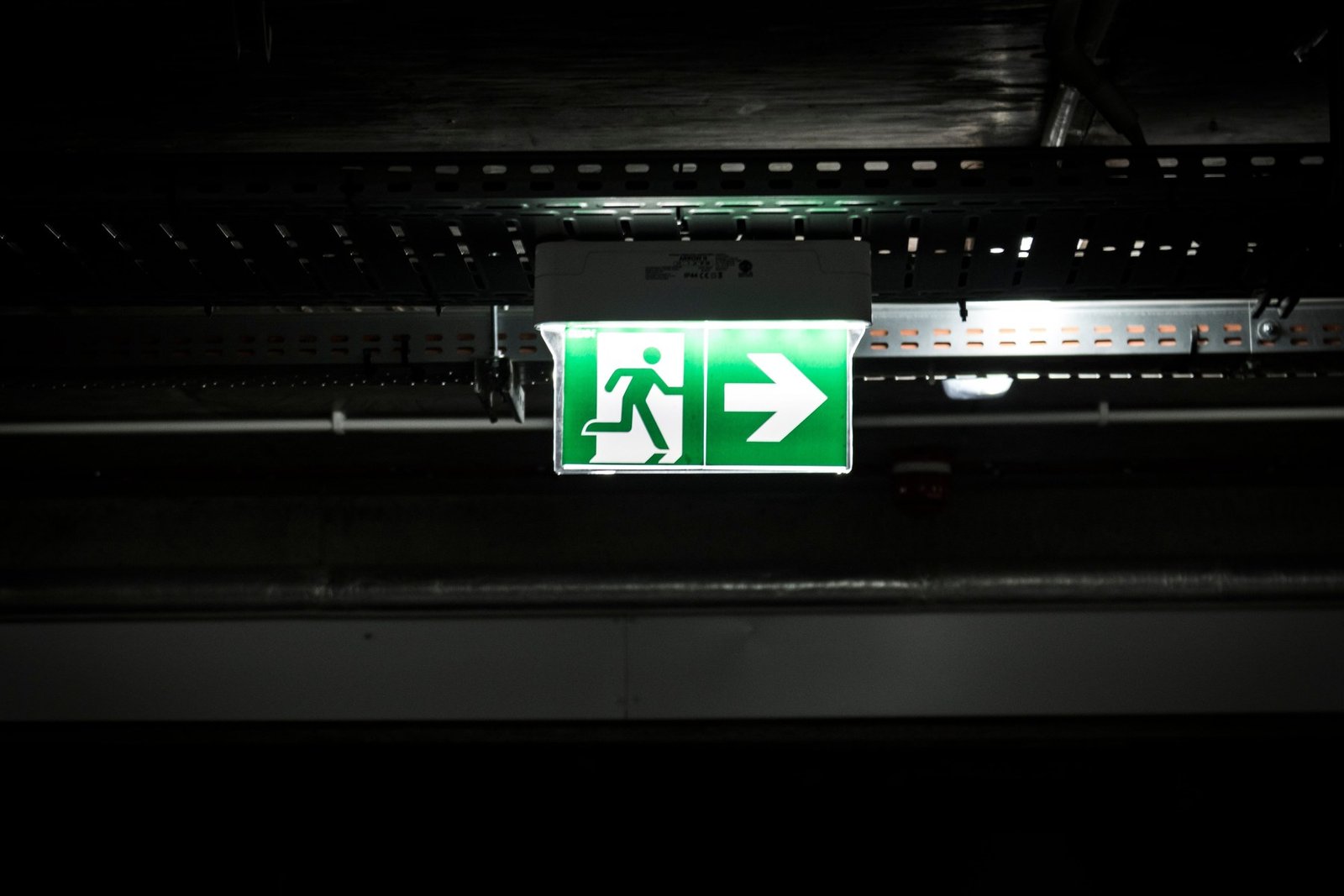
WHEN A NECK PROBLEM IS URGENT
Neck pain is an emergency when it comes with loss of bowel or bladder control, sudden severe weakness or trouble walking, fever, significant trauma, or the worst headache of your life. Clumsiness in both hands, balance change or weakness that keeps progressing are cord signs that need to be seen within days.
Most neck pain is not an emergency and waiting two weeks costs nothing. A short list of findings is the exception, and the reason to know them is that the damage they cause is the kind that does not reverse.
When should you go to the ER for neck pain?
- Loss of bowel or bladder control, or numbness in the saddle area.
- Sudden severe weakness in an arm or leg, or difficulty walking that came on over hours to days.
- Any visual loss or double vision with a new headache, particularly over fifty — see temporal arteritis.
- The worst headache of your life, sudden in onset.
- Neck pain with fever, or after recent infection, injecting drug use, or immunosuppression.
- Neck pain after significant trauma, especially with midline tenderness.
Which neck symptoms need a doctor within days?
These are cord signs — myelopathy — and they are the group most often attributed to aging until they are advanced. Degenerative cervical myelopathy is the most common cause of spinal cord dysfunction in adults and its early signs are unglamorous.
- Clumsiness in both hands. Buttons, coins, keys, handwriting that has changed.
- Balance or gait change — feeling unsteady, particularly in the dark or on uneven ground.
- Weakness that is progressing rather than fluctuating with pain.
- Symptoms in both arms, rather than following one nerve down one arm.
- Electric shocks down the spine on bending the neck forward — Lhermitte’s sign.
The reason for urgency is specific: neurological function lost to prolonged compression frequently does not return after decompression. The operation prevents further loss more reliably than it restores what has gone.
Why does a change in walking get missed for years?
Because it is attributed to age, to knees, to a hip, or to being generally less steady than one used to be. It is rarely the thing that brings somebody to an appointment, and it is rarely asked about at one.
That is the reason vestibular testing is part of the workup here. Gait disturbance in a neck patient has several causes and one of them does not wait, so it gets measured rather than assumed.
What neck pain is not an emergency?
This section exists because most people reading this page are frightened by something that is not dangerous.
- Severe pain, on its own, without neurological change. Pain intensity is a poor guide to seriousness in the neck.
- Numbness or tingling in one arm that is stable. Uncomfortable, usually a root, usually improves.
- Clicking, grinding or crunching. Almost never significant.
- An alarming MRI report. Multilevel degenerative change is normal past forty.
- Muscle spasm that locks the neck. Frightening and self-limiting.
If you are not sure
Err toward being seen. The findings above are not subtle once you know to look for them, and the cost of a same-day assessment that finds nothing is trivial next to the cost of the alternative. Over-read this page.
What does progressive weakness mean?
People are told to watch for progressive weakness and are not told how to tell. It means measurably worse over days to weeks in the same task — the same jar, the same stairs, the same buttons — not weakness that varies with how much the pain is flaring on a given afternoon.
Pain-limited weakness fluctuates and improves on a good day. True motor loss does not have good days. If you are unsure, pick one specific task and check it every few days rather than trying to judge the whole limb at once.
Why coming in and being fine beats waiting
The findings on this page are uncommon and the cost of missing one is permanent. Nobody here will be irritated that you called about clumsy hands and turned out to have an irritated C6 root.
The reverse conversation — explaining to somebody that the gait change they mentioned eighteen months ago was the cord — is the one worth avoiding, and it is the reason gait gets measured here rather than eyeballed.
If you are already in the system and worried
Waiting lists are not a clinical judgment about your urgency. If something on the first two lists has appeared or worsened since you were last seen, that is new information and it changes your position — say so explicitly rather than assuming the appointment date reflects it.
The one that hides in a pain clinic
Degenerative cervical myelopathy is the most common cause of spinal cord dysfunction in adults, and it presents in exactly the population a neck practice sees: somebody in their sixties with years of neck complaints, who mentions almost in passing that they have become unsteady on stairs.
It gets missed because every one of its early signs has an innocent explanation available. Clumsy hands become arthritis. Unsteadiness becomes age. Dropping things becomes carelessness. Each is individually plausible and together they are a pattern.
What to say when you call
Lead with the neurological change rather than the pain. “My hands have gone clumsy over the last two months” moves faster through any booking system than “my neck hurts”, and it is the accurate description of what has changed.
If you have noticed a change in your walking, say that in the first sentence. It is the symptom most likely to be omitted as irrelevant and the one most likely to alter the timeline.
What people ask about neck red flags
My hands are clumsy but not weak. Does that count?
Yes. Clumsiness with normal strength is a classic early myelopathic sign and it is more specific than weakness. It should be assessed within days. Cervical radiculopathy in detail. Why muscle deprived of its nerve supply runs on a shorter clock than numbness does.
How fast does myelopathy progress?
Variably — some people are stable for years and some deteriorate over months. That unpredictability is precisely why it is assessed rather than watched. What hand symptoms localize to.
Is a stiff neck with fever always meningitis?
No, and it is serious enough that it is treated as urgent until excluded. That belongs in an emergency department the same day, not in a pain clinic. A stiff neck that will not settle.
Can this wait until my scheduled appointment?
If anything in the first two lists applies, no. Call, or go. Nobody here will be annoyed that you came in and were fine. How a root problem is confirmed.
What are the red flags for neck pain?
There are two groups. Go to an emergency department now for loss of bowel or bladder control, sudden severe weakness or trouble walking, fever, neck pain after significant trauma, visual loss with a new headache, or the worst headache of your life. Be seen within days for clumsy hands, a change in balance or walking, weakness that keeps getting worse, symptoms in both arms, or electric shocks down the spine when you bend your neck forward.
Can neck pain be a sign of something serious?
Sometimes, but how much it hurts is a poor guide. Severe pain on its own, without numbness, weakness or other nerve changes, is usually not dangerous. The serious causes show up as neurological change. Loss of bowel or bladder control is an emergency. Clumsy hands, unsteady walking and weakness that gets worse week to week point to pressure on the spinal cord, and nerve function lost that way often does not come back.
I woke up and my neck is locked. Is that an emergency?
Usually not. A neck locked by muscle spasm is frightening, and it settles on its own. Clicking and grinding are almost never significant either. It becomes urgent when the stiff neck comes with fever, follows a significant injury, or brings weakness, symptoms in both arms or trouble walking. If the stiffness simply will not go away, read a stiff neck that will not settle.
What will the ER do for a pinched nerve in the neck?
Its job is to rule out the dangerous causes, such as spinal cord compression, infection or fracture, and to get the pain down for the night. When none of those is present, the usual result is short-term medication and advice to follow up. Working out which root is involved, and why, is not what an emergency visit is built to do. Go straight there for the findings on this page; for everything else, book an examination instead. What actually gets called a pinched nerve.
Slowly worsening hand clumsiness and an unsteady walk are cord signs that creep rather than strike. Cervical stenosis and myelopathy explains how they are graded before they become urgent.
Related reading
- When your hands are the problem
- Temporal arteritis
- Vestibular testing
- Cervical radiculopathy
- Why your MRI is normal
- Connect with us
Nothing on this page waits for an insurer, an adjuster or an attorney. Payment is answered afterward, on how treatment gets paid for.
If something on the first two lists applies, do not book — call
Same-day assessment, or an emergency department. This is the one page here that does not wait for an appointment.
12174 Natural Bridge Rd, Suite 302
St. Louis, MO 63044
Next to DePaul Hospital, just off the 270 and 70 junction, west of the airport.
Sources
- Tetreault L et al. Degenerative Cervical Myelopathy: A Practical Approach to Diagnosis. Global Spine J, 2022. PubMed 35043715
- Mechas CA et al. Diagnosis and Management of Degenerative Cervical Myelopathy. J Am Acad Orthop Surg, 2025. PubMed 40591976
- Fehlings MG et al. A Clinical Practice Guideline for the Management of Patients With Degenerative Cervical Myelopathy: Recommendations for Patients With Mild, Moderate, and Severe Disease and Nonmyelopathic Patients With Evidence of Cord Compression. Global Spine J, 2017. PubMed 29164035
- Choy WJ et al. Gait assessment tools for degenerative cervical myelopathy: a systematic review. J Spine Surg, 2022. PubMed 35441108