
Neck pain treatment · St. Louis
They said it would settle in six weeks. It has been eight months.
Six weeks is what the research says about most acute neck pain, and it is true. It is also the line that gets handed to the people it is not true for. They then spend eight months assuming they are the problem.
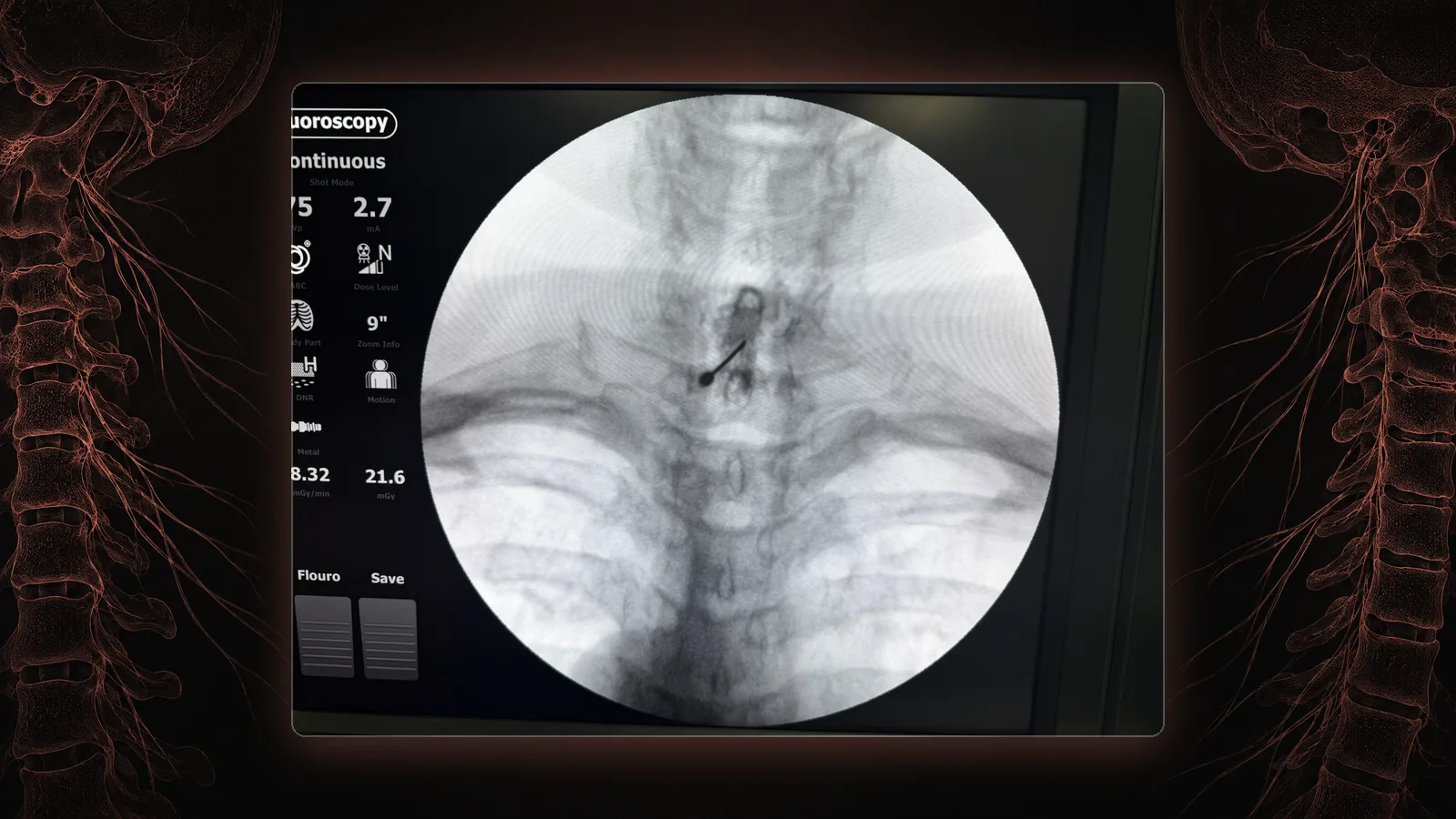
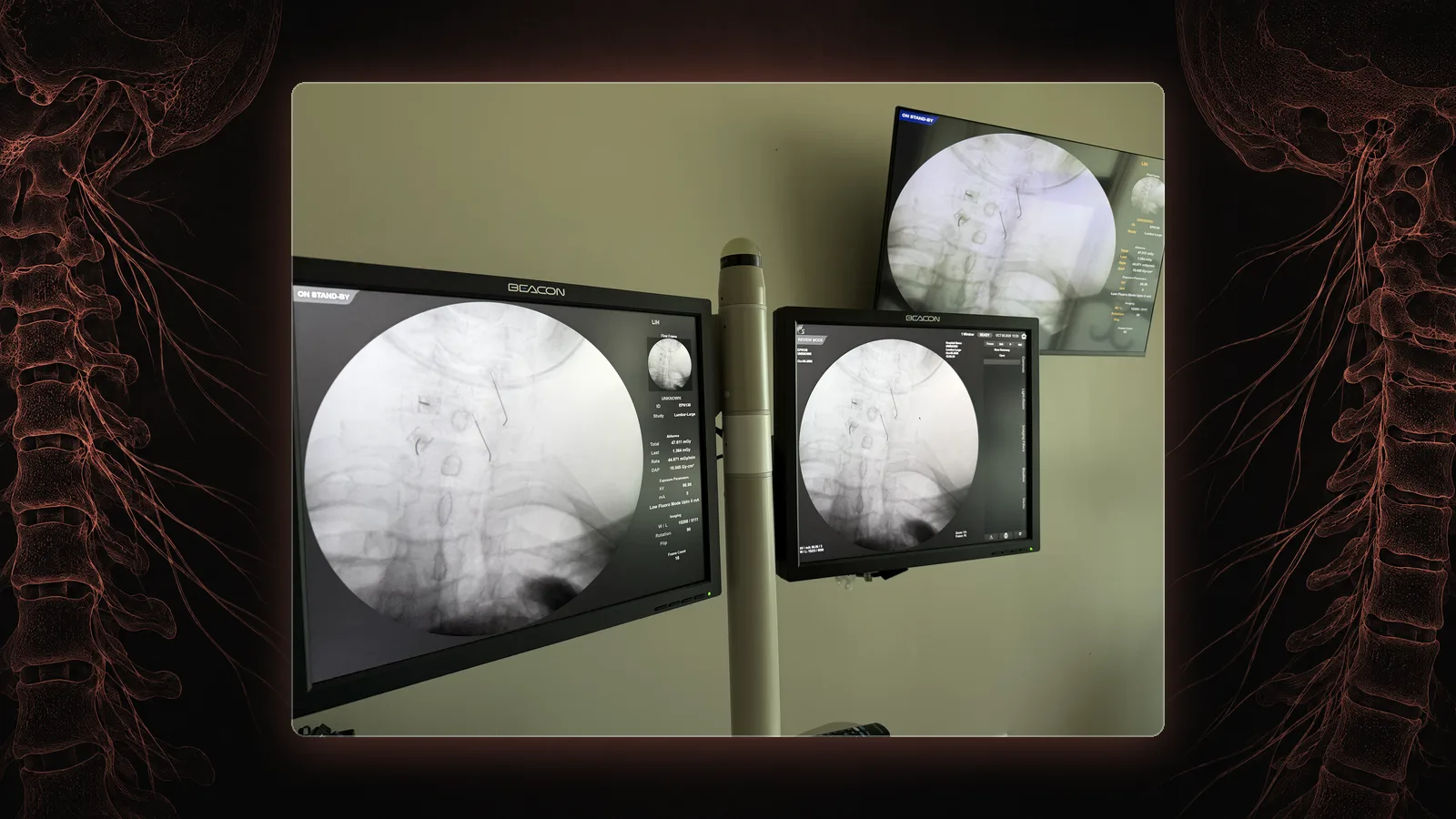
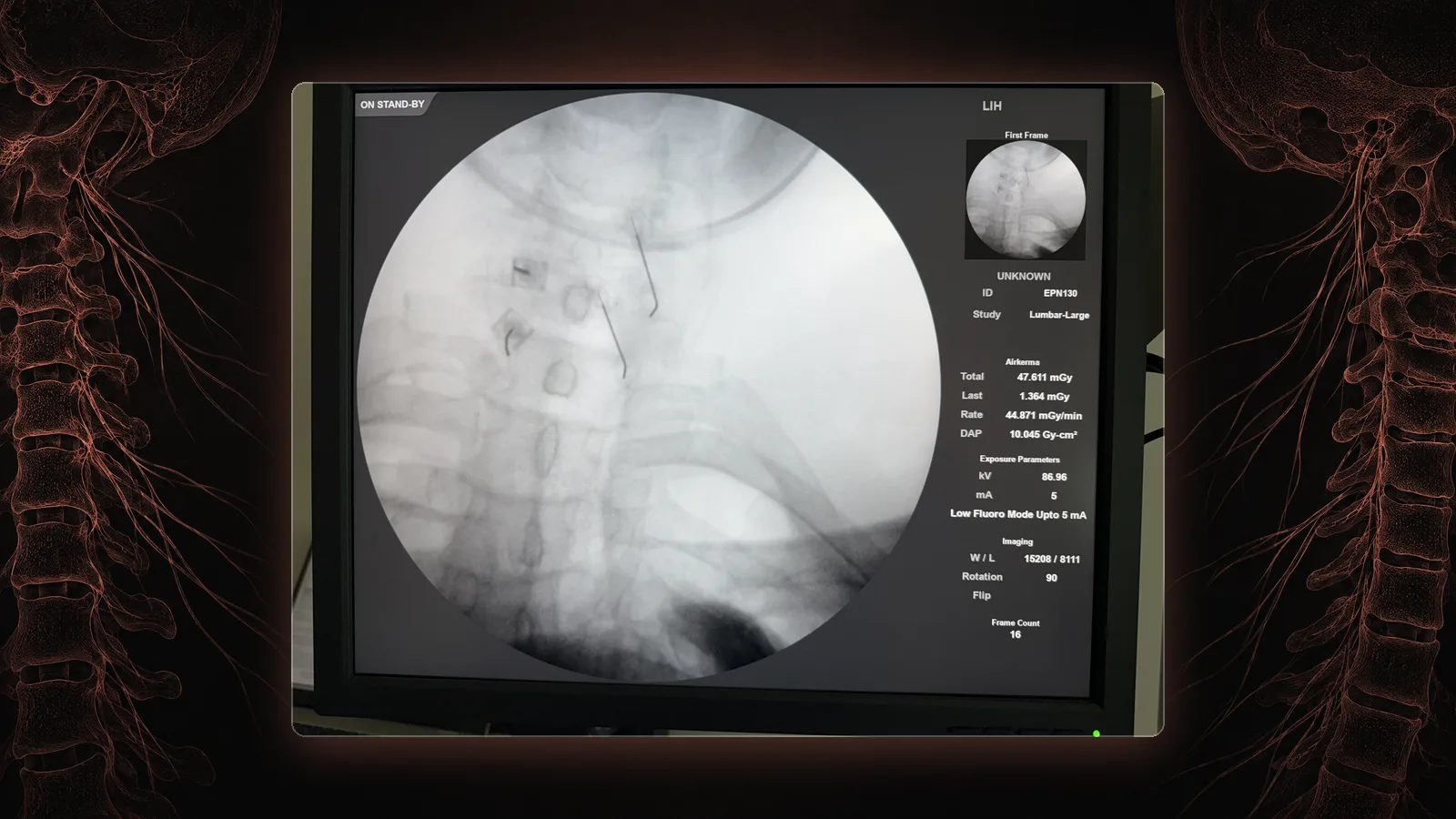
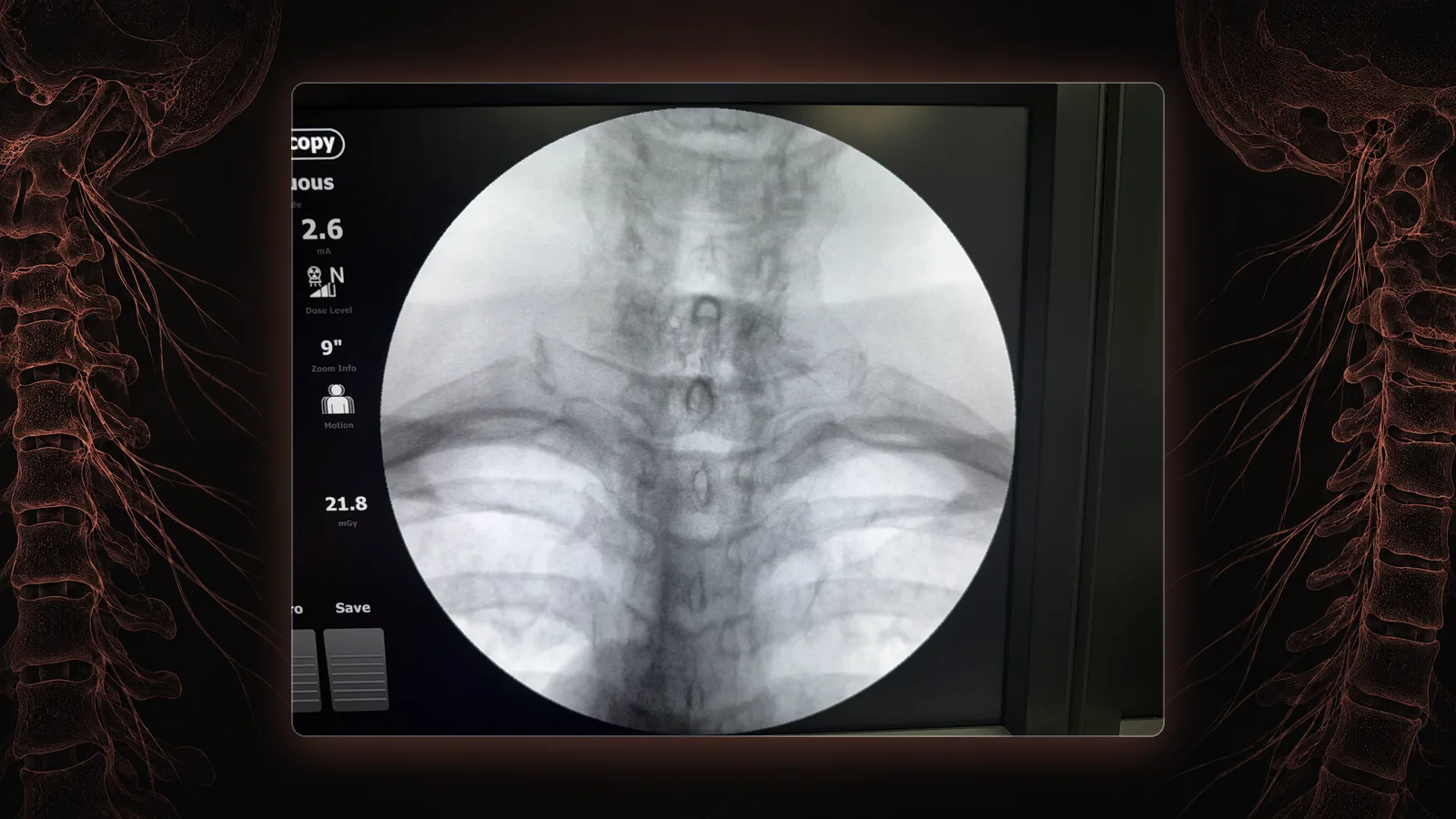
Which of these is you?
- It is worse on Thursday and fine by Sunday — a pattern that tracks your week rather than your tissue.
- Your hands are doing something — numbness, dropping things, waking up with a dead arm.
- The headache starts in your neck and ends behind your eye.
- The pain runs down one arm in a line you could draw.
- It started with a collision and never finished.
- Your scan was normal and nobody has examined you since.
Why is my neck pain not going away after six weeks?
The six-week figure comes from the natural history of acute mechanical neck pain (how new neck pain runs its course when left alone). For most people it holds. What it does not describe is the minority in whom a specific structure keeps generating pain after the acute episode has passed — a facet joint, a nerve root, a disc, the muscles that have been compensating for all of them.
Those people get the same advice on a loop. Rest it. Take an anti-inflammatory. Give it time. Each instruction is reasonable for the average case, and none of them is a diagnosis. Eight months in, the file records a patient who did not improve. It does not record the workup that was never done.
What causes neck pain that will not go away?
A neck is not one structure. The treatment depends entirely on which one is generating the pain. That question is answered by examination and, where it matters, by a diagnostic block. It is not answered by the adjective a radiologist used.
- The facet joints — the small paired joints at the back of each level. They are the most common source of persistent axial neck pain (pain in the neck itself). How they are identified.
- The nerve roots — where the pain leaves the neck and travels. Radiculopathy.
- The discs — and the key difference between a disc that looks bad and a disc that hurts. The difference.
- The muscles and the load on them — often the result rather than the cause, and treated as such.
Why did my X-ray or MRI not find the cause of my neck pain?
Degenerative change (the spine breaking down) in the cervical spine is close to universal past forty. It is found in huge numbers of people with no pain at all. Say a report lists disc desiccation (drying), osteophytes (bone spurs) and foraminal narrowing (tighter nerve openings) at three levels. That report is describing a neck that belongs to somebody your age. It is not a diagnosis. The gap between what it shows and what hurts is where most of these cases get stuck.
That is not an argument against imaging. It is an argument for reading it against an examination, not instead of one. More on why a normal scan is not reassurance.
What are the red flags for neck pain?
Some neck symptoms are not a matter of timing. Progressive weakness in a hand, a change in balance or handwriting, clumsiness doing buttons, or bowel and bladder change are cord signs. They need a surgical opinion rather than an injection. Those are set out on when a neck problem is urgent. Over-read that page rather than under-read it.
Where this sits against pain medication
The neck is one of the more common routes onto long-term opioid therapy. That is because the pain is constant, the diagnosis is often uncertain, and the procedures on offer often disappoint. Nobody here will require a taper as a condition of being assessed. Nobody will imply the dose is a question of character.
What we will do is refuse to inject a level that nothing has identified. That is because this sequence — a procedure, partial relief, a rising dose, another procedure — is how somebody ends up with two problems instead of one.
Why a neck-only practice
Because the neck gets ten minutes inside a general spine appointment. The structure most likely to be causing your pain cannot be found in ten minutes, or on any scan you have had.
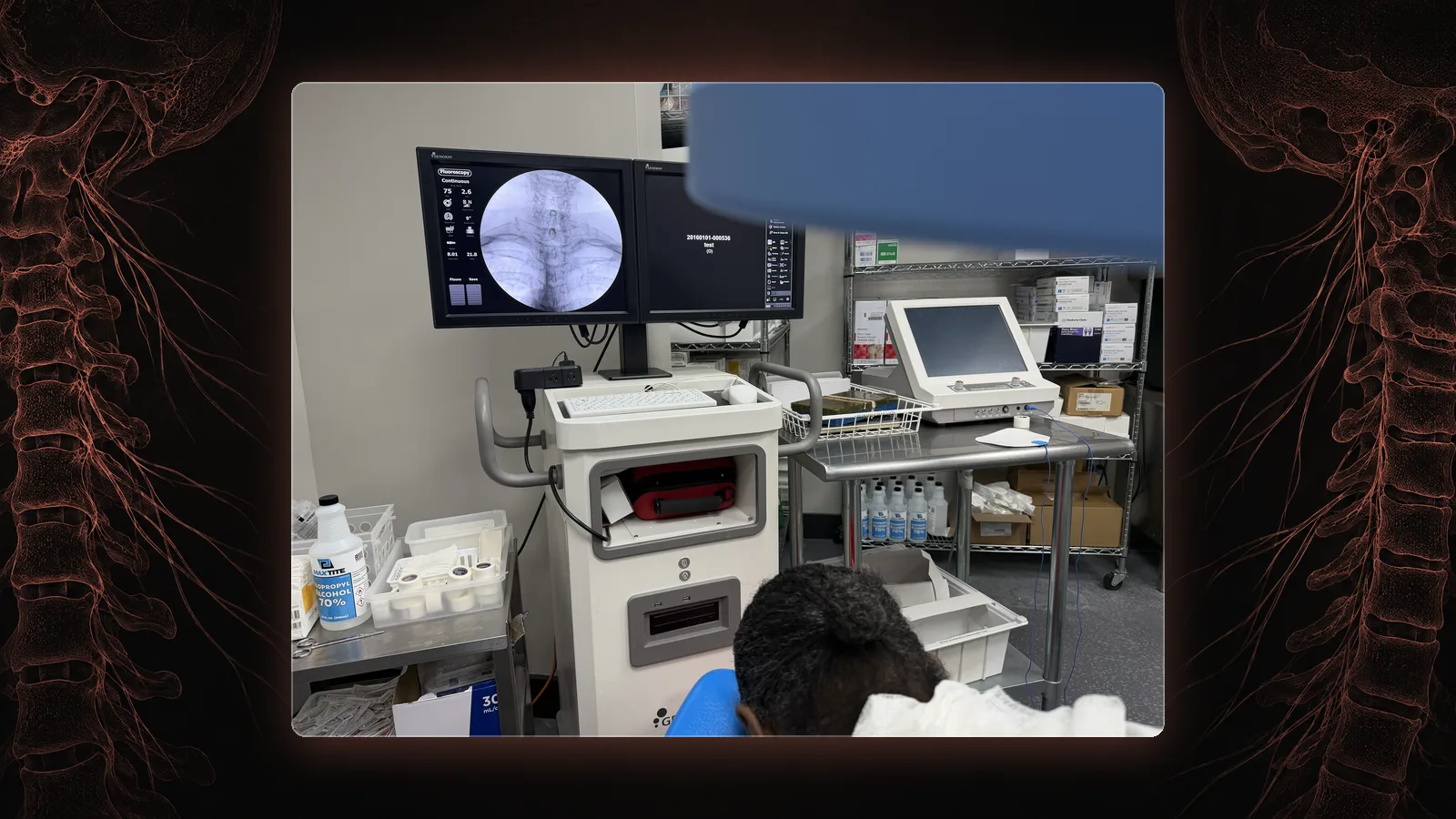
Narrowing the practice is what makes room for the parts that get skipped. That means a proper myotomal examination (testing each muscle group a nerve root controls). It means a diagnostic block rather than an assumption, and gait measured rather than eyeballed. It also means the metabolic bloodwork that explains why your tissue failed under a load thousands of people tolerate.
The engine underneath most of this
Chronic pain, obesity and type 2 diabetes are usually treated as three problems by three specialties. They share an engine. Insulin resistance and chronic metabolic inflammation glycate collagen (bind sugar to it) and stiffen it. They hold tissue in a degradative (breaking-down) state rather than a rebuilding one.
For a neck, that means a lower failure threshold. It also means slower repair between one working week and the next. It is why the same desk produces a problem in one person and not another. It is also why bloodwork belongs in a neck consultation, even though nobody expects to be asked for it.
Where we are
12174 Natural Bridge Rd, Suite 302, next to DePaul Hospital, just off the junction of 270 and 70 and west of the airport. Roughly fifteen minutes from St. Charles, eleven from Maryland Heights, sixteen from Creve Coeur. Parking is free and at the door, which matters when reversing is the thing you cannot do.
What people ask eight months in
Is it too late to work this out?
No. The length of time is diagnostic information, not a verdict. Pain that has lasted past the expected natural history is telling you the acute model did not apply. That changes what should be examined. It does not close the question. What the first visit covers.
My X-ray and MRI were both normal. What is left to find?
A great deal. Facet-mediated pain (pain from a facet joint) is not visible on imaging. It is identified with a diagnostic block. Muscular and myofascial pain generators are found by examination. Normal imaging rules some things out. It identifies almost nothing about the structures that most often cause persistent neck pain. What a normal scan does and does not rule out.
Do I need surgery?
Most people with persistent neck pain do not. The honest answer depends on whether nerve compression is producing a progressive deficit. Where it is, we will establish it precisely first, so the surgical conversation starts from a refined diagnosis rather than a scan. Where it is not, an operation is being asked to solve a problem it does not address. How candidacy is assessed.
Will you just give me another injection?
Not into a level nothing has identified. The first job is establishing which structure is generating the pain. If the answer is that no procedure is indicated, that is what you will be told. Cervical facet syndrome, in full.
What type of doctor is best for neck pain that will not go away?
One who examines the neck properly before treating it. That is why this is a neck-only practice. It means a myotomal examination and a diagnostic block to confirm which structure hurts. It means gait measured rather than eyeballed, and metabolic bloodwork. Where the findings show progressive weakness or cord signs, the right doctor is a surgeon. You will be told so rather than offered an injection.
What is the most effective treatment for neck pain?
The one aimed at the structure actually causing it. A facet joint, a nerve root, a disc and overloaded muscles each call for a different treatment. So the first step is finding which one is generating the pain. That is done by examination and, where it matters, a diagnostic block. Injecting a level nothing has identified is how a procedure, partial relief and a rising dose turn into a cycle.
How can I tell if my neck pain is muscular?
Muscular and myofascial pain is found by examination, not by a scan. In a neck that has hurt for months, the muscles are often the result rather than the cause. They have been compensating for a facet joint, a nerve root or a disc. That is why the examination checks those structures too, instead of treating the muscle as the whole story.
Related reading
- Work-pattern neck pain
- When your hands are the problem
- Cervical radiculopathy
- Why your MRI is normal
- When a neck problem is urgent
- What happens at the first visit
There is a workup for this that goes past the first normal X-ray
When you want it, that is what we do. Tell us how long it has been and what your hands are doing, and we will tell you whether this is worth your time.
12174 Natural Bridge Rd, Suite 302
St. Louis, MO 63044
Next to DePaul Hospital, just off the 270 and 70 junction, west of the airport.