NECK TURN EXERCISE FOR A STIFF NECK
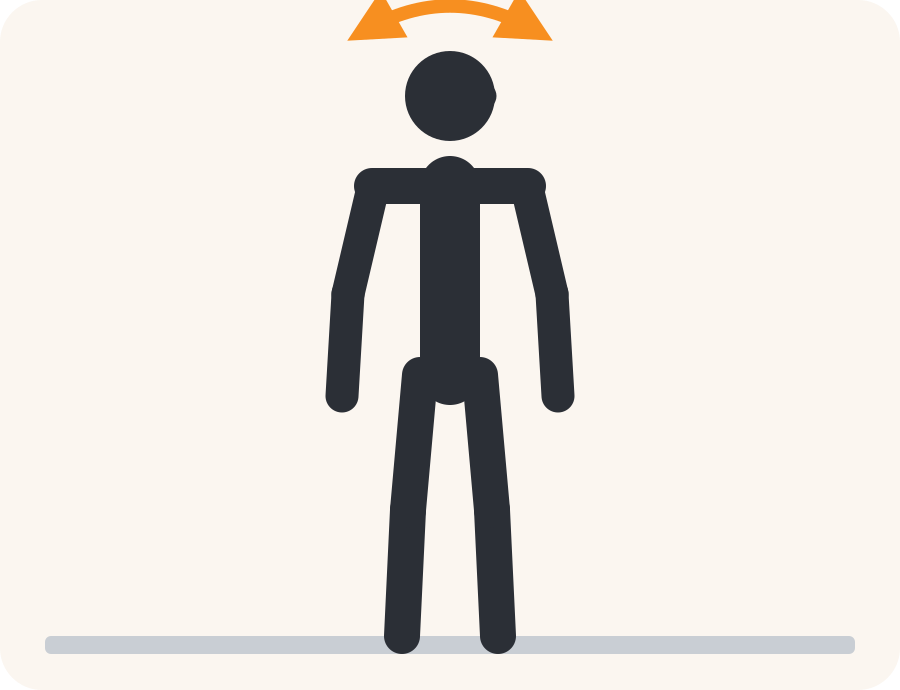
The neck turn keeps a stiff or injured neck rotating while it heals. Sit tall with relaxed shoulders, slowly turn your head to look over one shoulder and then the other, stop where it is still comfortable, hold 3 seconds and do 10 turns to each side.
Only do this one if your physician ticked it on your home exercise sheet. Unless you are told otherwise, do the exercises you were given twice a day, every day.
How do you do the neck turn?
- Get set: Sit tall in a firm chair with your shoulders loose and low.
- Move: Slowly rotate your head until you are looking over one shoulder. Come back to the middle, then turn toward the other shoulder. Stop at the first sense of tightness.
- How many: Hold for 3 seconds on each side. Do 10 turns each way.
Why does the neck turn help?
After a crash or a night of sleeping wrong, the neck protects itself by locking up. A little guarding is normal at first. A neck that stays locked for weeks gets stiffer, and turning to back out of the driveway becomes a whole-body move.
Easy, regular turns keep the small joints of the neck sliding. This is not a hard stretch. Cranking the head to the end of its range is one of the moves our article on neck exercises that help and hurt warns against. If you woke up unable to turn at all, read woke up with a locked neck first.
Which mistakes should you avoid?
- Whipping your head fast, or bouncing once you reach the end of the turn.
- Letting your chest and shoulders turn along with your head.
- Turning into sharp pain. Stop at the first strain.
When should you stop and call us?
A gentle stretch, some effort, or mild next-morning soreness is fine. Stop the exercise and call (314) 886-5892 if you get any of these:
- Sharp or stabbing pain
- Pain 2 points above where you started that is still there an hour later
- New numbness, tingling or weakness in your arm or hand
- Dizziness, or any change in your vision
If you get chest pain, have trouble breathing or faint, call 911. The signs that need same-day care are listed on when a neck problem is urgent.
Bring your exercise log to each visit
Each time you finish your exercises, mark it on your log, and jot down a single pain score per day. Each visit, your technician tallies your checked days and has you demonstrate one exercise to keep your technique honest.
What to remember
- Slow turns, no bouncing.
- Your shoulders face forward; only your head moves.
- Stop at the first point of tightness.
Show us you have it: Turn to each side for us and show us where you stop. At your next visit we go over it again, and we are glad to repeat any step you want to see twice.
More neck and shoulder exercises
- Chin tuck (neck)
- Side bend (neck)
- Shoulder blade squeeze (neck)
- Pendulum (shoulder)
- Wall walk (shoulder)
- Outward rotation with band (shoulder)
- Band row (shoulder)
- I raise (shoulder)
- Y raise (shoulder)
- T raise (shoulder)
- A press (shoulder)
This is one part of our physiotherapy program for neck pain. Every treatment here is ordered and overseen by a physician who has examined your neck, and none begins until a physician is on site and ready to step in at once.
Get a home program built for your neck
Your physician checks which exercises fit you at the first visit, and your technician watches your form at every visit after that.
12174 Natural Bridge Rd, Suite 302
St. Louis, MO 63044
Next to DePaul Hospital, just off the 270 and 70 junction, west of the airport.